Rhinoplasty Surgery in Hisar. Your Complete Guide to Finding the Best Surgeon
If you’ve been looking for rhinoplasty surgery in Hisar, you are well aware of how perplexing the search can be: there are several clinics, contradictory evaluations, and no simple way to determine who truly possesses the surgical skills necessary to safely alter a nose. More than just how you appear in pictures, a nose job can alter breathing, facial equilibrium, and years of silent self-consciousness about a crooked bridge, a drooping tip, or a hump.
This guide explains what rhinoplasty entails, how much it typically costs locally, how to find a truly qualified surgeon, and why patients in Hisar and the surrounding districts of Haryana frequently mention Dr. Sandeep Chahar when discussing nose job surgery in Hisar rhinoplasty surgery in Hisar.
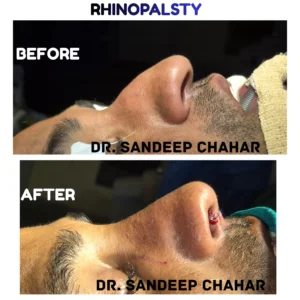
Quick Answer: Best Rhinoplasty Surgeon in Hisar
For readers who want the short version: rhinoplasty surgery in Hisar performed by a fellowship-trained plastic surgeon — rather than a general practitioner or a non-surgical “aesthetic clinic” — is the safer route for anyone wanting permanent, structural changes to the nose. Dr. Sandeep Chahar holds an M.Ch. in Plastic Surgery along with an MBBS and DNB in General Surgery, and his practice in Hisar focuses on rhinoplasty, gynecomastia surgery, liposuction, hair transplantation, and reconstructive procedures, with an emphasis on natural-looking, function-preserving outcomes rather than a single “ideal” nose shape applied to everyone.
Rhinoplasty Surgery in Hisar: Key Facts at a Glance
| Aspect | Details |
|---|---|
| Procedure name | Rhinoplasty (commonly called a “nose job”) |
| Surgery duration | 1.5 to 3 hours, depending on complexity |
| Anesthesia | General anesthesia or local anesthesia with sedation |
| Hospital stay | Usually day-care or one night |
| Visible recovery | 7 to 14 days (cast and bruising) |
| Full settling of results | 6 to 12 months |
| Average cost in Hisar | ₹60,000 to ₹2,50,000 (varies by case) |
| Ideal candidate age | Generally 17–18 years and above, once facial growth is complete |
What Is Rhinoplasty? Understanding the Procedure
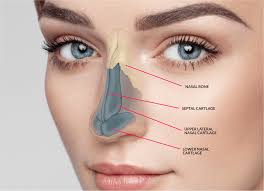
Rhinoplasty Surgery in hisar is a surgical procedure that reshapes the bone, cartilage, and sometimes the skin of the nose to change its size, shape, or function. It’s performed either purely for aesthetic reasons — correcting a dorsal hump, a wide tip, or nostril asymmetry — or for functional reasons, such as fixing a deviated septum that’s blocking airflow. Many patients need both at once, which is why a plastic surgeon trained in nasal anatomy, rather than someone offering it as a side service, makes a meaningful difference in the outcome.
Open vs. Closed Rhinoplasty Surgery in hisar
There are two basic surgical approaches, and the right one depends on how much correction is needed.
- Closed rhinoplasty: All incisions are made inside the nostrils, so there’s no visible external scar. This approach suits patients who need moderate hump reduction, tip refinement, or minor asymmetry correction.
- Open rhinoplasty: A small incision is added across the columella (the strip of skin between the nostrils), giving the surgeon full visibility of the nasal framework. This is generally preferred for complex cases, revision surgeries, or significant tip reshaping, and the resulting scar is typically barely noticeable once healed.
Cosmetic, Functional, and Revision Rhinoplasty surgery in hisar
- Cosmetic rhinoplasty focuses purely on appearance — straightening the bridge, refining the tip, or narrowing wide nostrils.
- Functional rhinoplasty (often combined with septoplasty) corrects breathing problems caused by a deviated septum, collapsed nasal valves, or enlarged turbinates.
- Revision rhinoplasty is performed when a previous nose surgery (done anywhere) didn’t heal as expected or needs further refinement. It’s technically more demanding because the original cartilage has already been altered.
Why Rather Go to a Metro City for Rhinoplasty Surgery in Hisar?
For a “proper” nose job, many patients from Hisar, Hansi, Tohana, and surrounding areas of Haryana still believe they must fly to Delhi or Chandigarh. That presumption is starting to become out of date. A board-certified plastic surgeon working in Hisar can provide the same surgical standards as a metro clinic, frequently with shorter wait times, easier follow-up access, and lower overall costs once travel and lodging are taken into account. Plastic surgery as a specialty is focused on training and surgical judgment, not geography.
Key Benefits of Nose Job Surgery in Hisar
- Lower overall cost compared to metro cities, without compromising on the surgeon’s qualifications
- Easier post-operative follow-up — swelling checks, cast removal, and suture review don’t require repeated long-distance travel
- Personalized attention in a smaller-city practice, rather than being one of dozens of cases on a single day’s list
- Local language comfort during consultations, which matters when discussing something as personal as facial appearance
- Continuity of care if revision or touch-up consultations are needed later
Meet Dr. Sandeep Chahar – Best Plastic Surgeon in Hisar
Choosing a surgeon for rhinoplasty is fundamentally a question of trust in their training, judgment, and aesthetic eye — not just their marketing. Dr. Sandeep Chahar is a Plastic, Reconstructive, and Aesthetic Surgeon based in Hisar, and his approach centers on precision, safety, and outcomes that look like a refined version of the patient’s own face rather than a generic “after” photo.
Qualifications & Training
- MBBS – foundational medical degree
- DNB (General Surgery) – diplomate of national board, surgical foundation training
- M.Ch. (Plastic Surgery) – the specialized surgical super-speciality qualification required to legitimately perform rhinoplasty, reconstructive, and aesthetic procedures
This qualification pathway matters because rhinoplasty is, technically, one of the more difficult procedures in plastic surgery — the margin between a refined result and a visibly “operated” nose is measured in millimeters of cartilage.
Areas of Specialization
Dr. Chahar’s practice covers a broad range of plastic and reconstructive procedures, including:
- Rhinoplasty (cosmetic, functional, and revision)
- Gynecomastia surgery
- Liposuction and body contouring
- Hair transplantation
- GFC/PRP therapy
- Ear reconstruction (otoplasty)
- Hand and microvascular surgery
- Diabetic foot reconstruction
Handling both cosmetic and reconstructive cases is relevant for rhinoplasty patients specifically, because reconstructive training builds the kind of detailed understanding of nasal cartilage, blood supply, and tissue healing that purely cosmetic-only practitioners may not have developed.
Why Patients Trust Dr. Chahar
Patients consistently mention three things: a straightforward, no-pressure consultation style, a willingness to explain exactly what surgery can and cannot achieve for a given nose shape, and a focus on results that hold up in profile, not just in front-facing photographs.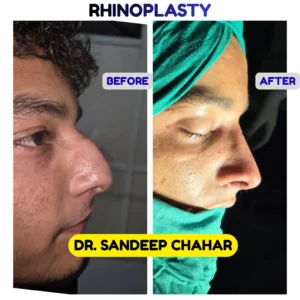
The Rhinoplasty Surgery Process: Step-by-Step
Understanding the process in advance reduces a lot of pre-surgery anxiety. Here’s roughly what to expect.
Step 1: Initial Consultation & Facial Analysis
The surgeon examines your nasal structure, skin thickness, and breathing function, discusses your concerns and goals, and explains what’s realistically achievable given your specific anatomy. This is also when medical history, allergies, and any previous nasal trauma or surgery are reviewed.
Step 2: Pre-Operative Preparation
Routine blood tests, sometimes a CT scan if breathing issues are involved, and instructions to stop blood-thinning medications, certain supplements, and smoking for a defined period before surgery.
Step 3: The Surgery
Anesthesia Options
Most rhinoplasty procedures are done under general anesthesia for patient comfort and surgical precision, though some limited tip-only procedures can be done under local anesthesia with sedation.
Surgical Techniques Used
Depending on the case, this may involve cartilage reshaping, bone rasping or osteotomy (to narrow a wide bridge), septal cartilage grafting (often borrowing from the septum itself for tip support), and closing the incisions with fine sutures.
Step 4: Recovery & Aftercare
A splint or cast is placed on the nose for support, and nasal packing (if used) is typically removed within a day or two.
Recovery Timeline
| Timeframe | What to Expect |
|---|---|
| Day 1–2 | Swelling, mild discomfort, splint in place |
| Day 3–7 | Bruising around the eyes peaks, then starts fading |
| Around Day 7 | Cast is usually removed |
| Week 2 | Most visible bruising gone; many return to desk work |
| Week 3–4 | Residual swelling reduces; light exercise can resume |
| Month 3 | Major swelling resolved; profile shape close to final |
| Month 6–12 | Final, refined result visible, especially at the tip |
Rhinoplasty Surgery in Hisar: Cost, Process and What to Expect
Cost is one of the most-searched questions around rhinoplasty surgery in Hisar, and understandably so — it’s a meaningful investment. The honest answer is that there’s no single fixed price, because the cost depends heavily on what your nose actually needs.
Factors That Affect Nose Job Surgery Cost
| Type of Procedure | Approximate Cost Range (INR)* |
|---|---|
| Cosmetic rhinoplasty (primary) | ₹60,000 – ₹1,50,000 |
| Functional rhinoplasty / septoplasty | ₹40,000 – ₹90,000 |
| Combined septorhinoplasty | ₹80,000 – ₹1,80,000 |
| Revision rhinoplasty | ₹1,50,000 – ₹2,50,000+ |
| Non-surgical nose job (filler) | ₹8,000 – ₹25,000 per session |
*Figures are indicative only and vary based on surgeon’s fee, hospital/OT charges, anesthesia type, graft material needed, and case complexity. An accurate quote can only be given after an in-person consultation.
Other elements that influence the final bill include whether cartilage grafting is required, whether it’s a first-time or revision surgery, the hospital’s facility charges, and post-operative care included in the package (follow-up visits, garment/splint costs, medication).
Who Is an Ideal Candidate for a Nose Job?
Not everyone who dislikes their nose is automatically a good surgical candidate. Generally, a good candidate is someone who:
- Has completed facial growth (typically 17–18 years or older, confirmed individually by the surgeon)
- Has a specific, identifiable concern — a dorsal hump, wide or droopy tip, nostril asymmetry, or a deviated septum affecting breathing
- Is in good general health, with no uncontrolled medical conditions that would complicate healing
- Has realistic expectations about what surgery can change versus what falls within normal facial variation
- Is not currently pregnant, and ideally a non-smoker (or willing to pause smoking, since it significantly slows healing)
Pros and Cons of Rhinoplasty Surgery
| Pros | Cons |
|---|---|
| Permanent correction of structural issues (hump, deviation, wide tip) | Involves surgery and anesthesia-related risks |
| Can resolve breathing difficulty when combined with septoplasty | Final swelling can take up to a year to fully settle |
| Long-lasting, natural-looking results with a skilled surgeon | Results are largely permanent — reversing requires complex revision |
| Improves overall facial harmony and self-confidence | Higher upfront cost than non-surgical alternatives |
| One-time investment versus repeated touch-ups | Requires 1–2 weeks of visible social downtime |
Rhinoplasty vs. Non-Surgical Nose Job: Which One Is Right for You?
A lot of patients ask whether nose fillers can replace surgery. They serve very different purposes.
| Feature | Surgical Rhinoplasty | Non-Surgical Nose Job (Fillers) |
|---|---|---|
| Permanence | Permanent | Temporary (6–18 months) |
| Can reduce nose size | Yes | No — can only add volume or camouflage |
| Corrects breathing issues | Yes, when combined with septoplasty | No |
| Downtime | 1–2 weeks visible, up to a year for full healing | 1–3 days |
| Anesthesia required | General or local with sedation | Topical numbing cream only |
| Cost over time | One-time cost | Recurring cost with repeat sessions |
| Best suited for | Structural changes — hump, deviation, tip refinement | Minor camouflage of small dips or slight asymmetry |
In short: if the issue is a bump, a wide bridge, or a breathing problem, fillers won’t fix it — only surgical rhinoplasty addresses structural change. Fillers are a temporary option for very minor irregularities only.
Common Mistakes to Avoid Before Your Nose Job Surgery in Hisar
- Choosing a surgeon based on price alone. The cheapest quote often comes from someone without full plastic surgery qualifications.
- Not verifying credentials. Always confirm an M.Ch. or equivalent plastic surgery qualification — not just a general medical degree or a short cosmetic course.
- Skipping a detailed, in-person consultation. Photos and phone consultations alone aren’t enough to plan a safe surgical approach.
- Ignoring the functional side. Focusing only on appearance while a breathing problem goes unaddressed often means a second surgery later.
- Setting expectations from filtered photos. Social media filters distort proportions in ways surgery cannot replicate.
- Returning to exercise or contact sports too early. This risks displacing the healing nasal bones.
- Touching, bumping, or removing the cast/splint early, which can compromise the final shape.
Expert Tips for the Best Rhinoplasty Results
- Ask to see real before-and-after cases with a nose shape and skin type similar to yours, not generic stock photography.
- If you have any history of nasal blockage or breathing difficulty, mention it specifically — it changes the surgical plan.
- Stop blood-thinning medications, certain herbal supplements, and smoking for the period your surgeon advises before surgery.
- Sleep with your head slightly elevated for the first one to two weeks to reduce swelling.
- Avoid direct sun exposure on the healing skin for several months, as it can cause pigmentation changes.
- Be patient with the final outcome — true rhinoplasty results take up to a year to fully settle, especially at the tip.
How to Choose the Best Plastic Surgeon in Hisar for Your Rhinoplasty
The single biggest factor in rhinoplasty outcomes isn’t the technique used — it’s the training and judgment of the surgeon holding the instruments.
Checklist: Questions to Ask Before Surgery
- Is the surgeon a qualified plastic surgeon (M.Ch./MS/DNB in Plastic Surgery), not just a general practitioner or cosmetologist?
- Where is the surgery performed — is it an accredited hospital or OT with full anesthesia backup?
- Can they show genuine before-and-after photos of similar nose types?
- How do they handle complications or unsatisfactory results, and what’s their revision policy?
- Will both aesthetic goals and breathing function be assessed during consultation?
- Is there a clear, itemized cost breakdown before you commit?
People Also Ask
Is rhinoplasty available in Hisar? Yes. Rhinoplasty surgery in Hisar is available through qualified plastic surgeons, including Dr. Sandeep Chahar, eliminating the need to travel to Delhi or Chandigarh for the procedure.
Who is the best surgeon for a nose job in Hisar? The best surgeon is one with verified plastic surgery qualifications (M.Ch. Plastic Surgery), hospital-based surgical facilities, and a track record of natural-looking results — credentials Dr. Sandeep Chahar holds.
How much does a nose job cost in India? Costs vary widely by city and complexity, generally ranging from ₹60,000 in smaller cities to ₹3,00,000+ in metro areas for complex or revision cases.
Can rhinoplasty change your face shape? Rhinoplasty reshapes the nose itself, which can improve overall facial balance and harmony, but it doesn’t alter the jawline, cheekbones, or other facial structures.
Frequently Asked Questions (FAQs)
1. What is the cost of rhinoplasty surgery in Hisar? Costs typically range from ₹60,000 to ₹2,50,000 depending on whether it’s cosmetic-only, functional, combined, or revision surgery. An exact quote requires an in-person consultation.
2. How long does a nose job surgery take? Most rhinoplasty procedures take between 1.5 and 3 hours, depending on the extent of correction needed.
3. Is rhinoplasty painful? Discomfort is generally mild to moderate and manageable with prescribed pain medication. Most patients describe more pressure and stuffiness than sharp pain.
4. How long is the recovery after rhinoplasty? Visible swelling and bruising typically resolve within 2 weeks, but final, refined results take 6 to 12 months to fully appear.
5. Can rhinoplasty fix breathing problems? Yes, when combined with septoplasty, rhinoplasty can correct a deviated septum and improve airflow significantly.
6. What is the right age for rhinoplasty? Generally 17–18 years and above, once facial bone and cartilage growth is complete, though this is confirmed individually by the surgeon.
7. Is rhinoplasty a permanent solution? Yes, the structural changes made during rhinoplasty are permanent, though minor changes can still occur with natural aging over decades.
8. What is the difference between rhinoplasty and septoplasty? Rhinoplasty reshapes the external appearance of the nose, while septoplasty corrects the internal septum to improve breathing. They’re often performed together as septorhinoplasty.
9. How do I choose the best plastic surgeon in Hisar for rhinoplasty? Verify their M.Ch. Plastic Surgery qualification, review genuine before-and-after cases, confirm hospital-based surgical facilities, and ensure both aesthetics and breathing function are assessed.
10. Will rhinoplasty leave visible scars? Closed rhinoplasty leaves no external scar. Open rhinoplasty leaves a tiny scar on the underside of the nose that typically fades and becomes barely noticeable.
11. Can a crooked or deviated nose be corrected with rhinoplasty? Yes, both the external crookedness and internal septal deviation can be corrected in the same surgery for improved appearance and breathing.
12. What should I avoid before and after rhinoplasty surgery? Avoid blood-thinning medications, certain supplements, smoking, strenuous exercise, sun exposure, and touching or bumping the nose during the healing period, as advised by your surgeon.
Conclusion: Take the First Step Toward Your Rhinoplasty Surgery in Hisar
A nose job is a personal decision, and it deserves a surgeon who treats it that way — someone who looks at your specific anatomy rather than applying a template, who’s upfront about realistic outcomes, and who has the formal plastic surgery training to back up the results. Rhinoplasty surgery in Hisar is no longer something that requires a trip to a metro city; with the right surgeon, you get the same surgical standards, easier follow-up, and a more personal consultation process closer to home.
If you’ve been considering a nose job surgery in Hisar, the next right step is a proper, in-person consultation — not another hour of comparing before-and-after photos online. Book a consultation with Dr. Sandeep Chahar to get a clear, honest assessment of what’s achievable for your nose, your breathing, and your face as a whole.
About Dr. Sandeep Chahar
MBBS, DNB (General Surgery), M.Ch. Plastic Surgery
Dr. Sandeep Chahar is a skilled Plastic, Reconstructive, and Aesthetic Surgeon dedicated to providing advanced surgical care with a patient-focused approach. Based in Hisar, he specializes in Rhinoplasty, Gynecomastia Surgery, Liposuction, Hair Transplantation, GFC/PRP Therapy, Ear Reconstruction, Hand & Microvascular Surgery, and Diabetic Foot Reconstruction. With a commitment to safety, precision, and natural-looking results, Dr. Chahar combines modern techniques with personalized treatment plans to help patients look and feel their best. His goal is to deliver exceptional care, confidence, and long-lasting outcomes for every patient.
Disclaimer: This article is for general informational purposes only and does not constitute medical advice. Surgical outcomes vary by individual; please consult Dr. Sandeep Chahar or a qualified plastic surgeon directly for an assessment specific to your anatomy and health history.