
Diabetic Foot Treatment in Hisar: When Should You See a Specialist?
You should see a specialist for diabetic foot treatment in Hisar immediately if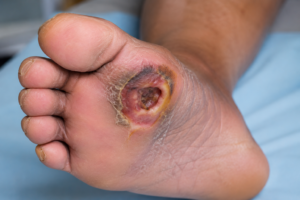 you notice any non-healing wound, ulcer, redness, swelling, numbness, or signs of infection on your foot. Diabetic foot complications progress rapidly — early specialist intervention is the single most important factor in preventing amputation.
Why Diabetic Foot Needs Immediate Attention
India is home to over 100 million people with diabetes — the second-highest number in the world. Among the many complications diabetes brings, diabetic foot remains one of the most serious, least discussed, and most preventable causes of disability and limb loss.
If you or a family member is living with diabetes in Hisar, Fatehabad, Jind, or Hansi, understanding diabetic foot treatment in Hisar — and knowing exactly when to seek specialist help — could mean the difference between full recovery and amputation.
This guide covers everything: what diabetic foot is, how it progresses, what warning signs demand immediate action, how wounds are cleaned and treated, and where to find expert diabetic foot treatment in Hisar from a qualified specialist.
What Is Diabetic Foot? (Definition & Overview)
Diabetic foot refers to a group of complications affecting the feet of people with diabetes. It arises from two primary mechanisms that diabetes causes over time:
1. Diabetic Neuropathy (Nerve Damage)
High blood sugar gradually damages the nerves in the feet, causing loss of sensation — meaning the patient cannot feel pain, heat, or injury. This is why a small blister or cut that would normally prompt action goes unnoticed in a diabetic patient until it becomes severely infected.
2. Peripheral Arterial Disease (Poor Blood Supply)
Diabetes damages blood vessels, reducing circulation to the feet and lower legs. Poor blood supply means even minor wounds heal extremely slowly — or not at all — creating the perfect environment for chronic diabetic foot wounds.
The combination of these two factors makes diabetic patients extraordinarily vulnerable to foot complications that healthy individuals would recover from easily.
Why Is Foot Care Important for Diabetics?
Why is foot care important for diabetics? The answer is stark: diabetic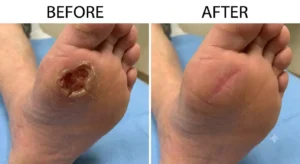 patients are up to 25 times more likely to require lower limb amputation than non-diabetics. In India, diabetic foot complications are responsible for more than 50% of all non-traumatic lower limb amputations.
Yet the majority of these amputations are preventable with proper foot care, early detection, and timely treatment.
For patients in Haryana, where diabetes prevalence is rising rapidly in both urban and rural populations, diabetic foot care awareness is more urgent than ever.
Stages of Diabetic Foot: From Early Signs to Severe Complications
Understanding the progression of diabetic foot helps patients recognize when intervention is needed.
Early Stage Diabetic Foot Ulcer
An early stage diabetic foot ulcer may appear as:
- A reddened, irritated patch of skin
- A small blister or callus
- A shallow open sore that doesn’t seem to heal
- Mild swelling or warmth in a localized area
At this stage, aggressive wound care and specialist review can prevent the situation from worsening. Most patients who seek care at the early stage avoid surgery entirely.
Intermediate Stage
- The wound deepens, exposing underlying tissue
- Infection begins — discharge, odor, and spreading redness appear
- Diabetic foot pain may develop if residual nerve function remains
- The surrounding skin shows signs of breakdown
Advanced/Severe Stage
- Deep infection reaching bone (osteomyelitis)
- Abscess formation
- Gangrene (tissue death) — visible as blackening of skin and tissue
- Systemic infection (sepsis) risk
At any stage beyond early, you need specialist diabetic foot treatment immediately — not general practitioner review.
Diabetic Foot Problems: Real Warning Signs to Never Ignore
Many patients ask about diabetic foot problems pictures and diabetic foot real images to understand what to look for. Here are the warning signs that demand urgent specialist review:
| Warning Sign | What It May Indicate |
|---|---|
| Any wound that hasn’t healed in 2 weeks | Impaired healing; infection risk |
| Redness or warmth spreading from a wound | Active bacterial infection |
| Foul odor from foot wound | Infection, possible necrosis |
| Black or dark tissue on or around wound | Gangrene — emergency |
| Fever with a foot wound | Systemic infection; urgent care |
| Swelling of entire foot or leg | Deep infection or vascular compromise |
| Numbness or loss of feeling in feet | Advancing neuropathy |
| Sudden cold or blue-colored foot | Acute arterial occlusion — emergency |
If you are seeing any of the above, do not wait. Search for diabetic foot near me and seek immediate specialist care.
When Should You See a Diabetic Foot Doctor in Hisar?
This is the most important question — and the answer is: sooner than you think.
See a diabetic foot doctor in Hisar immediately if:
- Any foot wound is not healing after 1–2 weeks
- You notice redness, swelling, or warmth around a wound or on the foot
- There is any discharge or odor from a foot sore
- You develop fever alongside a foot problem
- You see any dark or blackened tissue on your foot
- You have been told you have poor circulation in your legs
Schedule a routine appointment (within 1 week) if:
- You have diabetes and have never had a formal foot examination
- You notice new calluses, corns, or skin thickening
- Your feet feel persistently numb, tingling, or burning
- You have difficulty finding comfortable footwear due to foot shape changes
- A toenail has become ingrown or thickened
See a specialist at least annually if:
- You have well-controlled diabetes with no foot symptoms
- As part of your standard diabetic care routine
The most common — and most dangerous — mistake diabetic patients make is waiting too long. What begins as an early stage diabetic foot ulcer can become a limb-threatening infection within days to weeks.
How to Clean a Diabetic Foot Wound: A Safe Step-by-Step Guide
One of the most frequently searched questions is: how to clean a diabetic foot wound at home. Here is safe, evidence-based guidance — while emphasizing that all diabetic foot wounds should have specialist oversight.
Can We Clean a Diabetic Foot Wound with Spirit (Alcohol)?
No. This is a common and dangerous mistake. Alcohol (spirit), hydrogen peroxide, and iodine solutions damage the healthy tissue cells needed for wound healing. Can we clean diabetic foot wound with spirit? Absolutely not — it delays healing and can worsen outcomes.
Safe Wound Cleaning at Home (Until You See a Specialist)
- Wash your hands thoroughly before touching the wound
- Rinse gently with clean, lukewarm normal saline (not tap water if avoidable)
- Pat dry — never rub — with a clean, soft cloth or sterile gauze
- Cover with a clean, non-adhesive dressing to protect from contamination
- Do not apply any home remedies, herbal pastes, or spirit-based solutions
- Elevate the foot when sitting or lying down to reduce swelling
- Seek specialist review within 24–48 hours — do not simply dress and forget
Best Ointment for Diabetic Foot Wound
The best ointment for diabetic foot wound depends entirely on the wound’s condition, depth, and infection status — and should be prescribed by a specialist after wound assessment. Commonly used agents include:
- Antimicrobial wound dressings (silver-containing, iodine-based in appropriate formulations)
- Collagen-based wound care products
- Hydrogel dressings for dry wounds
- Medicated preparations prescribed by your diabetic foot doctor
Do not self-prescribe wound ointments. What works for a clean, superficial wound may be completely wrong for an infected or deep ulcer.
Diabetic Foot Treatment: What Specialists Actually Do
Comprehensive diabetic foot treatment goes far beyond simple dressing changes. Here is what expert management involves:
1. Thorough Wound Assessment
The specialist evaluates wound depth, infection signs, blood supply (vascular assessment), nerve function (neurological assessment), and overall diabetic control. Real diabetic foot problems pictures and diagnostic imaging (X-ray, MRI) may be used to assess bone involvement.
2. Surgical Debridement
Removal of dead, infected, or non-viable tissue is the cornerstone of diabetic foot wound healing. This must be done by a trained surgeon — not at home. Debridement clears the wound of bacteria-harbouring tissue and stimulates the body’s healing response.
3. Infection Control
Appropriate antibiotics — guided by wound culture results — are essential when infection is present. The choice of antibiotic must match the specific bacteria involved.
4. Offloading
Removing pressure from the wound is critical. Specialist-prescribed diabetic footwear, total contact casting, or offloading devices redistribute weight away from the ulcer site, allowing healing to occur.
5. Vascular Intervention
If blood supply is compromised, procedures to restore circulation (angioplasty or bypass surgery) may be needed before wound healing can occur.
6. Advanced Wound Care Technologies
Hyperbaric Oxygen Therapy for Diabetic Foot Wound
Hyperbaric oxygen therapy for diabetic foot wound is an advanced treatment where the patient breathes 100% oxygen in a pressurized chamber. This dramatically increases tissue oxygen levels, combating infection and stimulating healing in wounds that are failing to respond to standard care.
Negative Pressure Wound Therapy (NPWT)
A sealed dressing connected to a suction device that removes excess fluid, reduces bacteria, and promotes granulation tissue growth.
Skin Grafting and Reconstructive Surgery
For large wounds that cannot close on their own, plastic surgical techniques — skin grafts, flap procedures — restore skin cover and complete healing. This is a core specialty of Dr. Sandeep Chahar, whose training in reconstructive surgery makes him uniquely qualified for complex diabetic foot reconstruction in Hisar.
7. Long-Term Diabetic Foot Care
After healing, patients require:
- Regular follow-up with their diabetic foot doctor in Hisar
- Proper diabetic footwear fitted by a specialist
- Daily diabetic foot care routine
- Glycaemic control optimisation
- Use of appropriate diabetic foot care products
How to Cure a Diabetic Foot Wound: What “Cure” Really Means
Many patients search for how to cure diabetic foot wound — and the honest answer is that diabetic foot wounds are treated, not cured with a single remedy. Healing depends on:
- Controlling blood sugar levels (HbA1c management)
- Treating infection aggressively
- Restoring blood supply if compromised
- Consistent, expert wound management
- Protecting the wound from further trauma
There is no single best ointment for diabetic foot that replaces comprehensive specialist care. The wound is a symptom of an underlying systemic condition — diabetes — that must be managed holistically.
Diabetic Foot Care: Daily Practices That Prevent Complications
Diabetic foot care is not something you do only when a problem arises. It is a daily practice that dramatically reduces the likelihood of complications.
Daily Diabetic Foot Care Checklist
- Inspect both feet completely every day — use a mirror for the sole; ask a family member if vision is limited
- Wash feet in lukewarm water (test temperature with your elbow, not your foot, due to reduced sensation)
- Dry thoroughly, especially between the toes — moisture promotes fungal infection
- Moisturize the skin (not between the toes) to prevent cracking
- Never walk barefoot — even indoors; a small object or rough surface can cause an unnoticed wound
- Wear well-fitted diabetic footwear at all times
- Trim toenails straight across — never curved at the edges
- Never self-treat corns, calluses, or ingrown toenails with blades or home remedies
- Check inside shoes for foreign objects before wearing
- Report any skin change, blister, or wound to your doctor promptly
Diabetic Footwear: Why the Right Shoes Matter More Than You Think
Diabetic footwear is not simply “comfortable shoes.” Specialist diabetic footwear is engineered to:
- Distribute foot pressure evenly across the entire sole
- Eliminate pressure “hotspots” where ulcers form
- Accommodate foot deformities (Charcot foot, hammer toes)
- Provide rigid protection without friction
- Use breathable, non-irritating materials
Standard footwear — even soft, padded styles — does not provide these benefits. Patients with neuropathy particularly need custom or specialist-prescribed diabetic footwear because they cannot feel when shoes are causing damage.
Diabetic foot care products such as custom insoles (orthotics), therapeutic socks, and foot inspection mirrors are all part of a comprehensive foot protection strategy.
Diabetic Foot Pain: Understanding What It Means
Diabetic foot pain is complex and paradoxical:
- In early neuropathy, patients may experience burning, tingling, or sharp pain in the feet — this is the nerve signalling its distress
- In advanced neuropathy, pain disappears as nerve fibres die — this is actually more dangerous, because the protective alarm system is gone
- Ischaemic pain (from poor blood supply) causes cramping, especially during walking, and severe rest pain in advanced cases
- Infection-related pain signals active tissue damage
Never assume that the absence of diabetic foot pain means the foot is safe. Painless wounds in neuropathic feet are more dangerous, not less.
Diabetic Foot in India: The Scale of the Problem
Diabetic foot in India represents a public health crisis:
- India has approximately 101 million diabetics (IDF Diabetes Atlas, 2021)
- 15–25% of diabetic patients will develop a foot ulcer in their lifetime
- Diabetic foot complications account for the longest hospital stays among all diabetes-related admissions
- Up to 85% of lower limb amputations in diabetics are preceded by a foot ulcer that was not treated early enough
Diabetic foot in Hisar and the wider Haryana region follows national trends — with rural patients particularly at risk due to delayed access to specialist care, reliance on home remedies, and late presentation to hospitals.
This is exactly why accessible, expert diabetic foot treatment in Hisar from a qualified specialist like Dr. Sandeep Chahar is so critically important for the local community.
Meet Dr. Sandeep Chahar — Specialist for Diabetic Foot in Hisar
Dr. Sandeep Chahar MBBS | DNB (General Surgery) | M.Ch. Plastic Surgery
Dr. Chahar is a highly skilled Plastic, Reconstructive, and Aesthetic Surgeon based in Hisar, Haryana — and one of the region’s most experienced specialists in diabetic foot reconstruction.
His unique combination of plastic surgery and reconstructive expertise means he can manage the full spectrum of diabetic foot complications — from early wound care and debridement to complex skin grafting, flap reconstruction, and post-healing rehabilitation planning.
Why Choose Dr. Chahar for Diabetic Foot Care?
- Advanced reconstructive training: M.Ch. Plastic Surgery qualification — the highest surgical degree for this type of complex wound management in India
- Comprehensive approach: Addresses wound, infection, reconstruction, and prevention together
- Patient-focused: Personalized treatment plans, honest communication, and close follow-up
- Accessible location: Serving patients from Hisar, Fatehabad, Jind, and Hansi with specialist care close to home
Specializations include: Diabetic Foot Reconstruction, Rhinoplasty, Gynecomastia Surgery, Liposuction, Hair Transplantation, GFC/PRP Therapy, Ear Reconstruction, and Hand & Microvascular Surgery.
If you are searching for a diabetic foot doctor in Hisar, a best plastic surgeon for diabetic foot in Hisar, or simply diabetic foot near me in Haryana — Dr. Chahar’s clinic is your specialist destination.
Expert Tips from Dr. Sandeep Chahar
- Never ignore a foot wound for more than 48–72 hours — what looks minor can become limb-threatening within days
- Control your blood sugar aggressively — poor glycaemic control is the #1 barrier to wound healing
- Never use spirit, Dettol, or hydrogen peroxide on diabetic foot wounds — they damage healing tissue
- Invest in proper diabetic footwear — it is far less expensive than treating the ulcer that improper shoes cause
- Daily foot inspection is non-negotiable — use a mirror, a family member, or both
- Smoking cessation is essential — smoking dramatically worsens circulation in diabetic patients
- Annual foot check-up — even if your feet currently feel fine
Common Mistakes Diabetic Patients Make With Foot Care
- Waiting too long to seek care — the single most dangerous mistake
- Applying home remedies (turmeric, herbal pastes, spirit) to wounds — these delay or prevent healing
- Walking barefoot — even a 10-second trip across a rough floor can cause a wound that takes months to heal
- Buying footwear based on appearance rather than fit — pressure points from fashionable shoes cause ulcers
- Stopping antibiotics early when the wound “looks better” — infections require complete courses
- Ignoring painless foot changes — absence of pain does not mean absence of danger
People Also Ask
Q: What is diabetic foot and why is it dangerous? Diabetic foot refers to foot complications in diabetic patients caused by nerve damage and poor blood supply. It is dangerous because patients cannot feel injury (neuropathy), wounds do not heal normally, and infections spread rapidly — potentially requiring amputation if untreated.
Q: How do I know if my diabetic foot wound is infected? Signs of infection include increasing redness, warmth, swelling, foul odor, pus or discharge, fever, and worsening pain or new pain in a previously numb wound. Seek specialist care immediately if these signs appear.
Q: Can diabetic foot be cured completely? Individual diabetic foot wounds can heal completely with proper specialist treatment. However, the underlying risk from diabetes persists, requiring lifelong diabetic foot care to prevent recurrence.
Q: Is hyperbaric oxygen therapy available for diabetic foot in India? Yes. Hyperbaric oxygen therapy for diabetic foot wound is available in select specialist centres in India and is indicated for chronic, non-healing diabetic ulcers that have not responded to standard treatment.
Q: What footwear should a diabetic patient wear? Diabetic patients should wear specialist-prescribed diabetic footwear with extra depth, cushioned insoles, seamless interiors, and wide toe boxes — fitted by a specialist to their specific foot shape.
FAQ: Diabetic Foot Treatment in Hisar
1. What is the first sign of diabetic foot? The first signs are often subtle: numbness or tingling, a small sore or blister that doesn’t heal, skin colour changes, or unusual warmth in one area of the foot. An early stage diabetic foot ulcer may look like a small, painless wound.
2. How serious is diabetic foot? Very serious. Without proper treatment, diabetic foot ulcers can progress to deep infection, gangrene, and amputation within weeks. It is a medical emergency when infection or gangrene is present.
3. Where can I find a diabetic foot doctor in Hisar? Dr. Sandeep Chahar’s plastic surgery clinic in Hisar specializes in diabetic foot treatment and reconstruction, serving patients from Hisar, Fatehabad, Jind, and Hansi.
4. How long does diabetic foot wound healing take? Healing time varies significantly based on wound size, depth, infection, blood supply, and blood sugar control. Simple wounds may heal in 4–8 weeks; complex wounds may take months and require surgical intervention.
5. Can I treat diabetic foot at home? Minor wounds can be cleaned and dressed at home temporarily (using saline, not spirit), but all diabetic foot wounds require specialist assessment. Home treatment alone is not sufficient and is dangerous for anything beyond very superficial skin breaks.
6. What is the best ointment for diabetic foot wound? There is no single universal best ointment. The appropriate wound care product depends on wound type, depth, and infection status — your diabetic foot doctor in Hisar will prescribe what is right for your specific wound.
7. What diabetic foot care products should I use daily? Recommended diabetic foot care products include: moisturizing foot cream (not between toes), seamless diabetic socks, a long-handled foot inspection mirror, soft nail files, and specialist-prescribed orthotics or insoles.
8. Is diabetic foot surgery available in Hisar? Yes. Dr. Sandeep Chahar performs the full range of diabetic foot surgical treatments in Hisar — including debridement, skin grafting, flap reconstruction, and amputation prevention procedures.
9. How does hyperbaric oxygen therapy help diabetic foot wounds? Hyperbaric oxygen therapy for diabetic foot wound works by dramatically increasing the oxygen concentration in wound tissues, which kills anaerobic bacteria, stimulates new blood vessel formation, and accelerates tissue healing.
10. What diabetic footwear should I use? Specialist diabetic footwear should be prescribed after a foot assessment. Key features include extra depth, cushioned insoles, wide toe box, no internal seams, and firm but flexible soles. Never buy diabetic footwear without professional fitting.
11. Can diabetic foot lead to amputation? Yes — if not treated early and aggressively. However, the vast majority of diabetic amputations are preventable with timely specialist diabetic foot treatment, good blood sugar control, and proper footwear.
12. How often should a diabetic patient have their feet checked by a specialist? At minimum annually — even without symptoms. Patients with any history of foot ulcer, neuropathy, or poor circulation should be seen every 3–6 months.
Conclusion: Don’t Wait — Seek Diabetic Foot Treatment in Hisar Today
A diabetic foot wound that seems small today can become a life-altering emergency within days. The science is clear, the statistics are sobering, and the path forward is straightforward: early action saves limbs.
Diabetic foot treatment in Hisar from a qualified specialist is now accessible to patients across Haryana — in Hisar, Fatehabad, Jind, and Hansi — without needing to travel to a distant metro city. Expert diabetic foot care that addresses the wound, the infection, the circulation, and the reconstruction is available right here.
Whether you are searching for a diabetic foot doctor in Hisar, looking for guidance on how to clean a diabetic foot wound safely, or simply want to understand whether that small sore on your foot needs attention — the answer is always: act sooner rather than later.
Your feet carry you through life. Protect them.
Book Your Diabetic Foot Consultation with Dr. Sandeep Chahar
📍 Plastic Surgery Clinic — Hisar, Haryana 📞 Call or WhatsApp for an urgent or routine appointment 🌐 Serving patients from Hisar, Fatehabad, Jind, Hansi & across Haryana
Dr. Sandeep Chahar — MBBS, DNB (General Surgery), M.Ch. Plastic Surgery Specialist in Diabetic Foot Reconstruction, Plastic & Reconstructive Surgery
Don’t let a preventable complication become a permanent loss. Call today.
20 SEO Hashtags
#DiabeticFoot #DiabeticFootTreatment #DiabeticFootHisar #DiabeticFootCare #DiabeticFootWound #DiabeticFootUlcer #DrSandeepChahar #PlasticSurgeonHisar #DiabeticFootIndia #WoundCareIndia #DiabeticFootHealing #DiabeticFootwear #HyperbaricOxygenTherapy #DiabetesComplications #DiabeticWoundCare #FootCareForDiabetics #DiabeticFootDoctor #PlasticSurgeryHisar #DiabeticFootReconstruction #DiabetesAwareness
Disclaimer: This content is for educational and informational purposes only and does not constitute medical advice. Please consult Dr. Sandeep Chahar or a qualified medical specialist for diagnosis and treatment of diabetic foot conditions.